
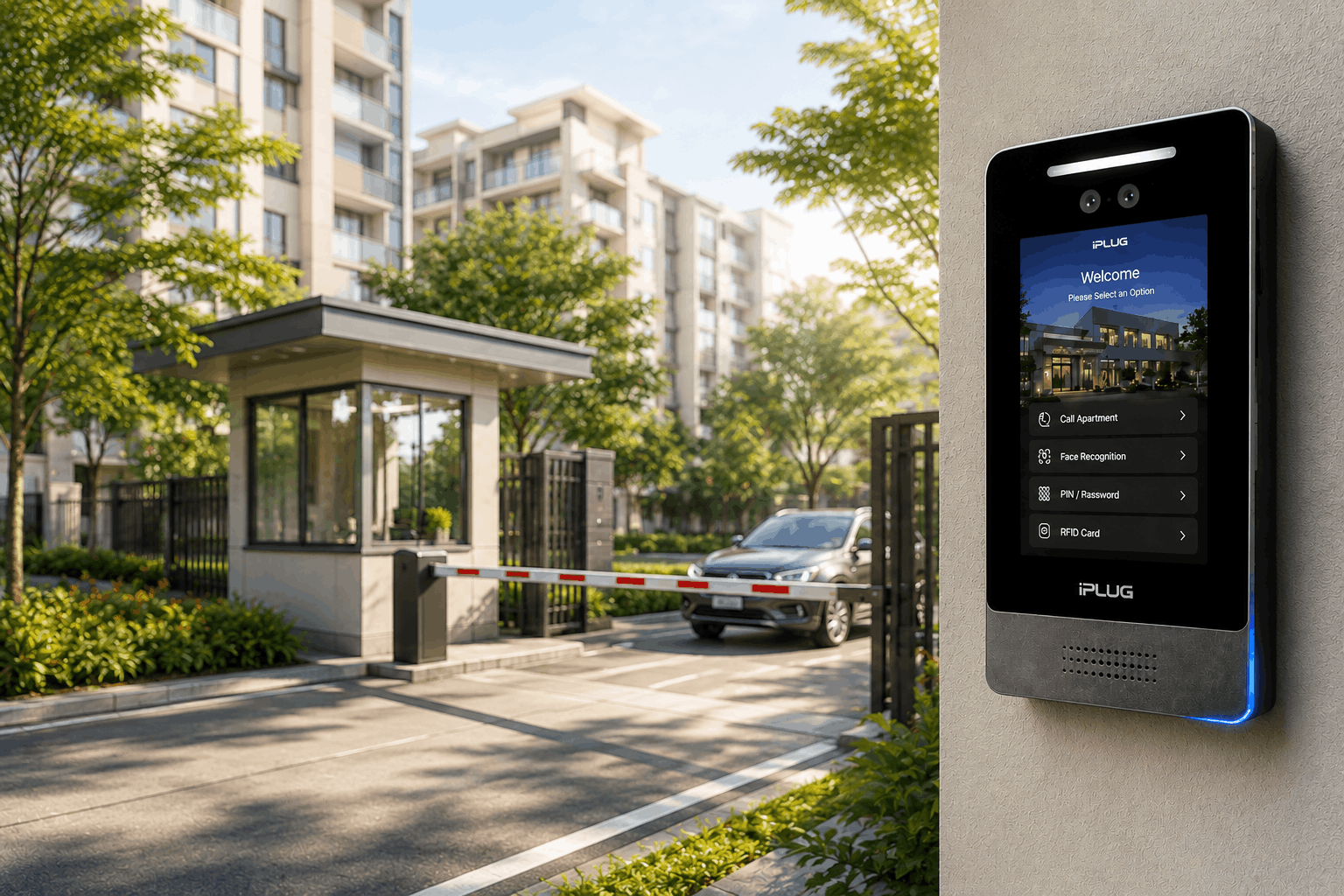
Cloud-Based Access Control Systems Explained
Cloud-Based Access Control Systems are changing how businesses manage entry and security. Instead of relying only on locally installed servers and traditional access management, cloud-based solutions can allow authorized administrators to manage access information through a connected platform.
Modern access control systems can help businesses control who can enter specific areas, manage users, review access activity, and update permissions more efficiently. Depending on the solution, organizations can use credentials such as PINs, biometric authentication, or an RFID card and reader.
From offices and schools to warehouses, hospitals, apartments, and commercial buildings, cloud technology is becoming an important part of modern access control security.
What Is a Cloud-Based Access Control System?
A cloud-based access control system is a security solution where access management data and administrative functions are hosted or managed through cloud infrastructure rather than relying entirely on an on-site server.
Administrators can use a supported web dashboard or application to manage users, permissions, and other system settings.
For example, an organization with multiple offices can manage access permissions from a centralized platform instead of maintaining separate systems at every location.
How Do Cloud-Based Access Control Systems Work?
The basic process is simple:
User → Access Credential → Door Reader → Access Controller → Cloud Platform
When an authorized person presents a credential at an access control system door, the system verifies the credential according to its configured rules.
Depending on the system architecture, access events and management information can then be synchronized with the cloud platform.
This gives administrators greater visibility and makes managing door access control systems easier across multiple locations.
Key Components of a Cloud Access Control System
A typical solution may include several components.
| Component | Purpose |
|---|---|
| Access Reader | Reads the user’s credential |
| RFID Card and Reader | Provides card-based access |
| Biometric Device | Verifies authorized users using biometrics |
| Access Controller | Manages door access decisions |
| Cloud Platform | Provides centralized management |
| Admin Dashboard | Allows administrators to manage users and permissions |
| Door Lock | Physically controls access to the door |
The exact components depend on the product and installation requirements.
Cloud-Based vs Traditional Access Control
Understanding the difference between cloud and traditional systems can help businesses select the right solution.
| Feature | Traditional Access Control | Cloud-Based Access Control |
|---|---|---|
| Management | Usually local | Centralized cloud platform |
| Remote Administration | Limited | Supported by compatible systems |
| Multi-Location Management | More complex | Easier to centralize |
| User Management | Local software/server | Web or cloud dashboard |
| System Updates | May require manual work | Often easier to manage |
| Access Monitoring | Local or network-based | Centralized on supported platforms |
| Scalability | Depends on infrastructure | Designed for easier expansion |
| Internet Dependency | Varies | Cloud features require connectivity |
Cloud-based systems can be particularly useful for organizations that manage multiple entrances or locations.
Benefits of Cloud-Based Access Control Systems
1. Centralized Access Management
One of the biggest advantages of Cloud-Based Access Control Systems is centralized management.
Administrators can manage users, permissions, and access settings from a single platform, depending on the system.
This can make managing building access control systems more efficient, especially for organizations with multiple doors.
2. Remote Administration
Cloud-based solutions can allow authorized administrators to manage certain access control functions remotely.
For example, an administrator may be able to add a new employee, modify permissions, or deactivate a user’s credentials without being physically present at the door.
This can save time and simplify everyday access control management.
3. Easier User Management
Managing employees and visitors becomes easier when access information is centralized.
Administrators can typically:
- Add new users
- Remove former employees
- Change access permissions
- Assign access levels
- Manage credentials
- Review access activity
These capabilities can improve overall access control security.
4. Easier Management Across Multiple Locations
Businesses with offices in different cities can benefit significantly from cloud-based solutions.
Instead of managing every location independently, authorized administrators can use a centralized platform where supported.
This makes door access control systems easier to monitor and manage as the organization grows.
5. Scalability
A growing organization may need additional doors, employees, departments, or locations.
Cloud-Based Access Control Systems can make expansion easier by providing a centralized architecture that can support additional devices and users, depending on the solution.
This makes cloud access control an attractive option for businesses planning future expansion.
More Benefits of Cloud-Based Access Control Systems
6. Real-Time Access Monitoring
One major advantage of Cloud-Based Access Control Systems is the ability to monitor access activity through a centralized platform, where supported.
Administrators can review events such as successful entries, denied access attempts, and other system activity. This can help security teams identify unusual activity and respond more quickly.
Real-time monitoring can therefore strengthen overall access control security.
7. Easier Access Permission Management
Employee roles can change frequently. A new employee may need access to a department, while a former employee’s credentials need to be disabled.
With a cloud-based platform, administrators can manage these permissions from a centralized dashboard, depending on the system.
| Access Management Task | Cloud-Based System |
|---|---|
| Add New User | ✅ Supported |
| Remove User | ✅ Supported |
| Change Permissions | ✅ Supported |
| Manage Multiple Doors | ✅ Supported |
| Review Access Events | ✅ Supported |
| Manage Multiple Locations | ✅ Supported |
This makes everyday access control management more organized.
8. Better Access Records
Maintaining accurate access records is important for businesses, schools, hospitals, offices, and other facilities.
A cloud platform can store and organize access information according to its configuration. Administrators can use these records to understand who accessed particular areas and when.
When integrated with suitable door access control systems, these records can support security monitoring and internal audits.
How Secure Are Cloud-Based Access Control Systems?
Security should always be a priority when selecting Cloud-Based Access Control Systems.
A cloud-based solution may use security measures such as:
- User authentication
- Role-based administrator permissions
- Encrypted communication
- Secure credential management
- Access activity monitoring
- Software and firmware updates on supported systems
However, cloud security depends on the provider, system architecture, configuration, and the organization’s own security practices.
Businesses should therefore evaluate the provider’s security standards before selecting a cloud access control system.
Where Are Cloud-Based Access Control Systems Used?
Cloud-based solutions can be used across many industries.
Offices
Businesses can manage employee access to offices, meeting rooms, server rooms, and restricted areas.
Residential Buildings
Apartments and housing communities can use building access control systems to manage resident and staff access.
Schools and Colleges
Access can be managed for classrooms, laboratories, administrative areas, and other restricted spaces.
Warehouses and Factories
Businesses can control access to production areas, storage rooms, and other sensitive locations.
Healthcare Facilities
Hospitals and clinics can use access control systems to restrict access to staff-only and sensitive areas.
What to Check Before Choosing a Cloud Access Control System
Not every cloud solution is the same. Before purchasing, consider these factors:
| Factor | Why It Matters |
|---|---|
| Scalability | Supports future expansion |
| User Management | Makes adding and removing users easier |
| Authentication | Provides suitable access methods |
| RFID Card and Reader | Useful for card-based access |
| Integration | Helps connect with CCTV and other systems |
| Reporting | Makes access activity easier to review |
| Security | Protects access data and administration |
| Support | Helps with installation and troubleshooting |
| Connectivity | Important for cloud-based features |
| Compatibility | Ensures proper door and hardware integration |
Selecting the right combination of features helps businesses build reliable access control security without paying for unnecessary functionality.
Why Choose iPlug Access Control Systems?
At iPlug, we provide modern access control system solutions designed for offices, residential communities, schools, factories, warehouses, and commercial buildings.
Our solutions can help organizations manage access more efficiently while improving security and convenience.
Why Choose iPlug?
- Advanced access control system technology
- Reliable door access control systems
- RFID card and reader solutions
- Biometric access options on supported models
- Scalable building access control systems
- Centralized management options
- Modern security hardware
- Easy installation and maintenance
- Enhanced access control security
- Dedicated Unlimited Customer Support
iPlug focuses on providing practical security solutions that can adapt to the needs of modern businesses and residential communities.
Frequently Asked Questions
What are Cloud-Based Access Control Systems?
Cloud-Based Access Control Systems are access management solutions that use cloud infrastructure to provide centralized management of users, permissions, devices, and access information through a supported platform.
Do cloud access control systems need the internet?
Cloud-based management features generally require internet connectivity. However, whether a door can continue making local access decisions during a connection interruption depends on the system’s architecture and configuration.
Can cloud-based access control systems manage multiple doors?
Yes. Many cloud solutions are designed to manage multiple door access control systems from a centralized platform, making them useful for growing organizations.
Can an RFID card and reader be used with cloud access control?
Yes, RFID card and reader technology can be integrated with compatible cloud-based access control solutions.
Are cloud-based access control systems secure?
They can provide strong security when properly designed and configured. Businesses should evaluate encryption, authentication, administrator permissions, updates, and the provider’s overall security practices before selecting a system.
Who can benefit from cloud access control?
Offices, schools, hospitals, warehouses, factories, apartment communities, hotels, and businesses with multiple locations can benefit from centralized cloud-based access control.
Conclusion
Cloud-Based Access Control Systems provide a modern way to manage security, users, permissions, and access activity through centralized platforms. Compared with traditional systems, cloud-based solutions can make remote administration, multi-location management, reporting, and future expansion easier.
From an RFID card and reader to biometric authentication and centralized dashboards, businesses can choose different technologies according to their security requirements. However, organizations should carefully evaluate scalability, connectivity, system security, compatibility, and customer support before investing in a cloud access control system.
For businesses and residential communities looking for dependable building access control systems, iPlug provides modern security solutions designed for convenient access management, reliable performance, and stronger access control security.
