
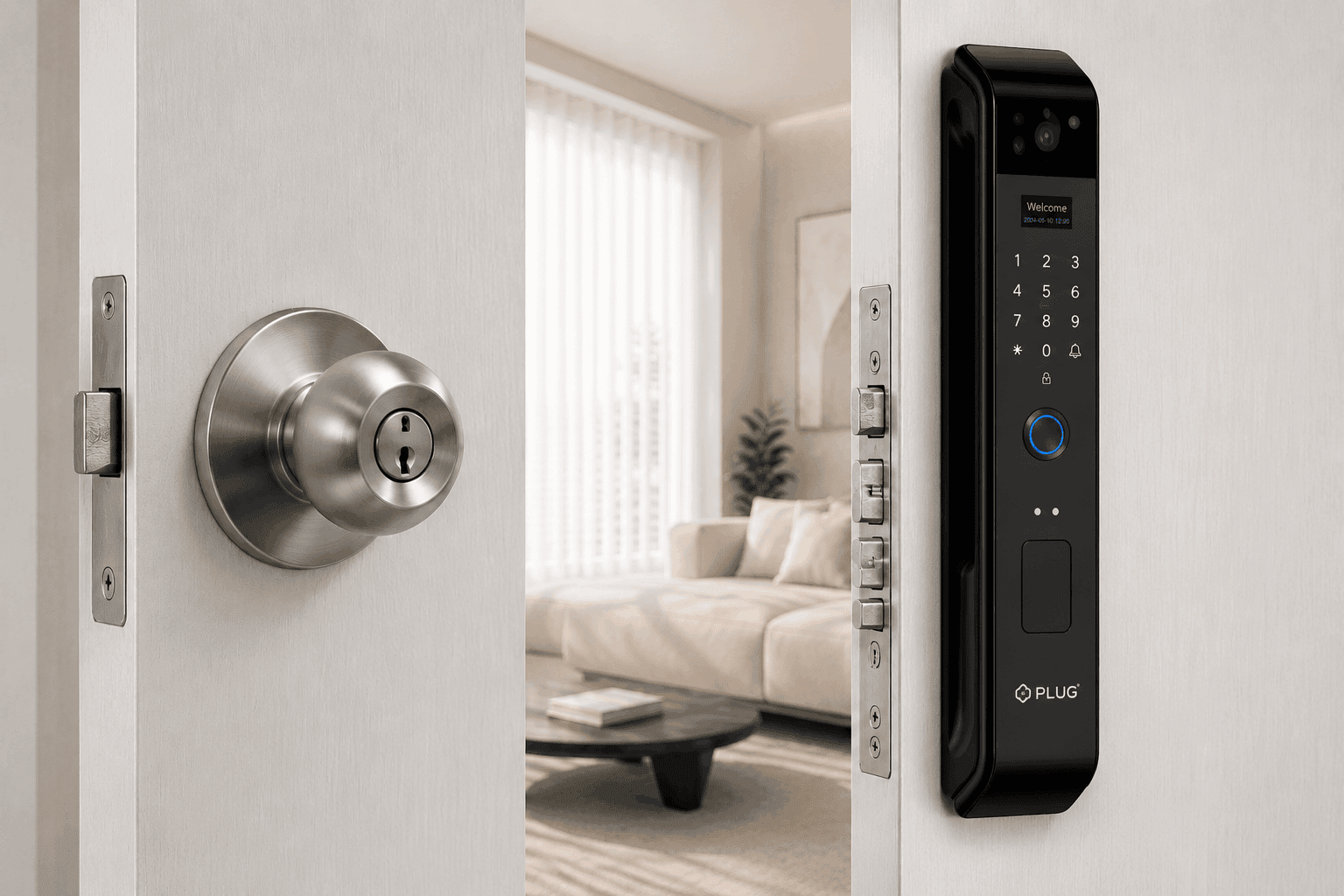
Are Smart Locks Safer Than Traditional Locks? Complete Comparison
Are Smart Locks Safer Than Traditional Locks? This is one of the most common questions homeowners ask when upgrading their home security. While traditional locks have protected homes for decades, modern smart door locks offer advanced technology, keyless convenience, and multiple authentication methods that can improve everyday security.
A smart lock allows homeowners to unlock their doors using fingerprints, PIN codes, RFID cards (supported models), mobile apps (supported models), or mechanical backup keys. In contrast, traditional locks rely entirely on physical keys, which can be lost, stolen, or duplicated.
Understanding the differences between a digital door lock and a traditional lock helps you choose the best solution for your home’s security needs.
Are Smart Locks Safer Than Traditional Locks?
In many situations, smart door locks provide additional security and convenience compared to traditional locks. However, the level of security depends on the quality of the lock, correct installation, and how it is used.
A premium fingerprint door lock combines advanced authentication methods with strong mechanical construction, making unauthorized access more difficult while simplifying everyday entry for authorized users.
Smart Locks vs Traditional Locks
1. Authentication Methods
Traditional locks use only physical keys.
A smart door lock can provide multiple unlocking options, depending on the model:
- Fingerprint Recognition
- PIN Code
- RFID Card (supported models)
- Mobile App Access (supported models)
- Mechanical Backup Key
Having multiple authentication methods gives homeowners greater flexibility.
2. Convenience
One of the biggest advantages of a keyless door lock is convenience.
Instead of carrying keys everywhere, homeowners can unlock the door using fingerprints or PIN codes, making daily access faster and easier.
Traditional locks require users to carry and manage physical keys at all times.
3. Home Security
A high-quality digital door lock helps improve home security by reducing common issues associated with physical keys, such as loss or unauthorized duplication.
Many smart locks also provide additional security features depending on the model.
4. User Management
Traditional locks cannot distinguish between different users.
A smart door lock allows homeowners to register multiple users, making it easier to manage access for family members or authorized individuals.
This feature is particularly useful for larger households.
5. Lost Keys
One of the most common problems with traditional locks is misplaced keys.
A fingerprint door lock reduces dependence on physical keys, allowing registered users to access the home without carrying a key every day.
6. Multiple Unlocking Options
Modern smart locks provide flexibility by offering several unlocking methods.
Even if one method is unavailable, another supported option may still be used.
This versatility makes a digital door lock suitable for modern homes.
7. Modern Design
Besides improving smart home security, a smart door lock also enhances the appearance of your entrance.
Modern designs complement contemporary homes while providing practical security benefits.
Quick Comparison Table
| Feature | Smart Door Lock | Traditional Lock |
|---|---|---|
| Keyless Entry | Yes | No |
| Fingerprint Access | Supported on many models | No |
| PIN Code Access | Supported on many models | No |
| Physical Key | Backup option on many models | Primary method |
| Multiple Users | Supported on many models | Limited |
| Convenience | High | Moderate |
| Home Security Features | Advanced (model dependent) | Basic |
When Is a Smart Door Lock the Better Choice?
If you’re still wondering Are Smart Locks Safer Than Traditional Locks, the answer often depends on your lifestyle and security needs. A smart door lock is an excellent choice for homeowners who value convenience, flexibility, and enhanced home security.
A smart lock is ideal for:
- Families with children
- Working professionals
- Senior citizens
- Apartment owners
- Villa owners
- Airbnb and rental property hosts
- Smart home users
A quality fingerprint door lock makes everyday access easier while reducing dependence on physical keys.
Common Myths About Smart Locks
Many people hesitate to switch to a digital door lock because of common misconceptions. Let’s separate myths from facts.
Myth 1: Smart Locks Are Easy to Hack
Modern smart door locks use advanced security technologies and authentication methods. Choosing a trusted brand, using strong passwords (where applicable), and keeping the software updated on supported models help maintain security.
Myth 2: Smart Locks Stop Working Without Internet
This is incorrect. Most smart locks continue to operate locally using fingerprint recognition, PIN codes, RFID cards (supported models), or a mechanical backup key even if the internet is unavailable.
Myth 3: Smart Locks Replace All Traditional Security
A smart door lock is designed to enhance home security, not replace good security habits. Proper installation, regular maintenance, and responsible access management are still important.
Myth 4: Smart Locks Are Difficult to Use
Most keyless door locks are designed with user-friendly interfaces, making them simple for family members of all ages to operate.
Why Choose iPlug Smart Door Locks?
At iPlug, we design premium smart door locks that combine advanced technology, stylish design, and reliable security for modern homes.
Why Choose iPlug?
- Premium-quality smart door lock
- Advanced fingerprint door lock technology
- Multiple unlocking methods
- Reliable digital door lock performance
- Elegant modern design
- Enhanced home security
- Easy installation
- Low maintenance
- Dedicated Unlimited Customer Support
Whether you’re upgrading an apartment, villa, office, or independent house, iPlug offers secure and convenient smart locking solutions.
Frequently Asked Questions
Are Smart Locks Safer Than Traditional Locks?
Are Smart Locks Safer Than Traditional Locks? In many situations, yes. A high-quality smart door lock offers multiple authentication methods, improved convenience, and additional security features compared to traditional locks. However, the overall security also depends on proper installation, product quality, and responsible use.
Can smart locks work without internet?
Yes. Most smart locks continue to function locally using fingerprint recognition, PIN codes, RFID cards (supported models), or backup keys even without an internet connection.
What happens if the battery runs out?
Most digital door locks provide low-battery warnings well in advance. Many models also include backup unlocking methods, such as a mechanical key or emergency power options, depending on the product.
Are smart door locks suitable for families?
Yes. A fingerprint door lock allows multiple authorized users, making it convenient for families while improving smart home security.
Why choose iPlug Smart Door Locks?
iPlug provides advanced smart door locks with premium quality, reliable performance, modern designs, and Dedicated Unlimited Customer Support.
Conclusion
Understanding Are Smart Locks Safer Than Traditional Locks helps homeowners make an informed decision when upgrading their security. While traditional locks continue to offer basic protection, a modern smart door lock provides additional convenience through keyless entry, multiple authentication methods, and enhanced home security features. Choosing a reliable digital door lock from a trusted brand can improve both safety and everyday living.
Whether you want a fingerprint door lock for your apartment, villa, or family home, investing in a quality smart lock is a practical step toward better smart home security. With iPlug Smart Door Locks, you receive advanced technology, dependable performance, elegant designs, and Dedicated Unlimited Customer Support for long-lasting peace of mind.
