
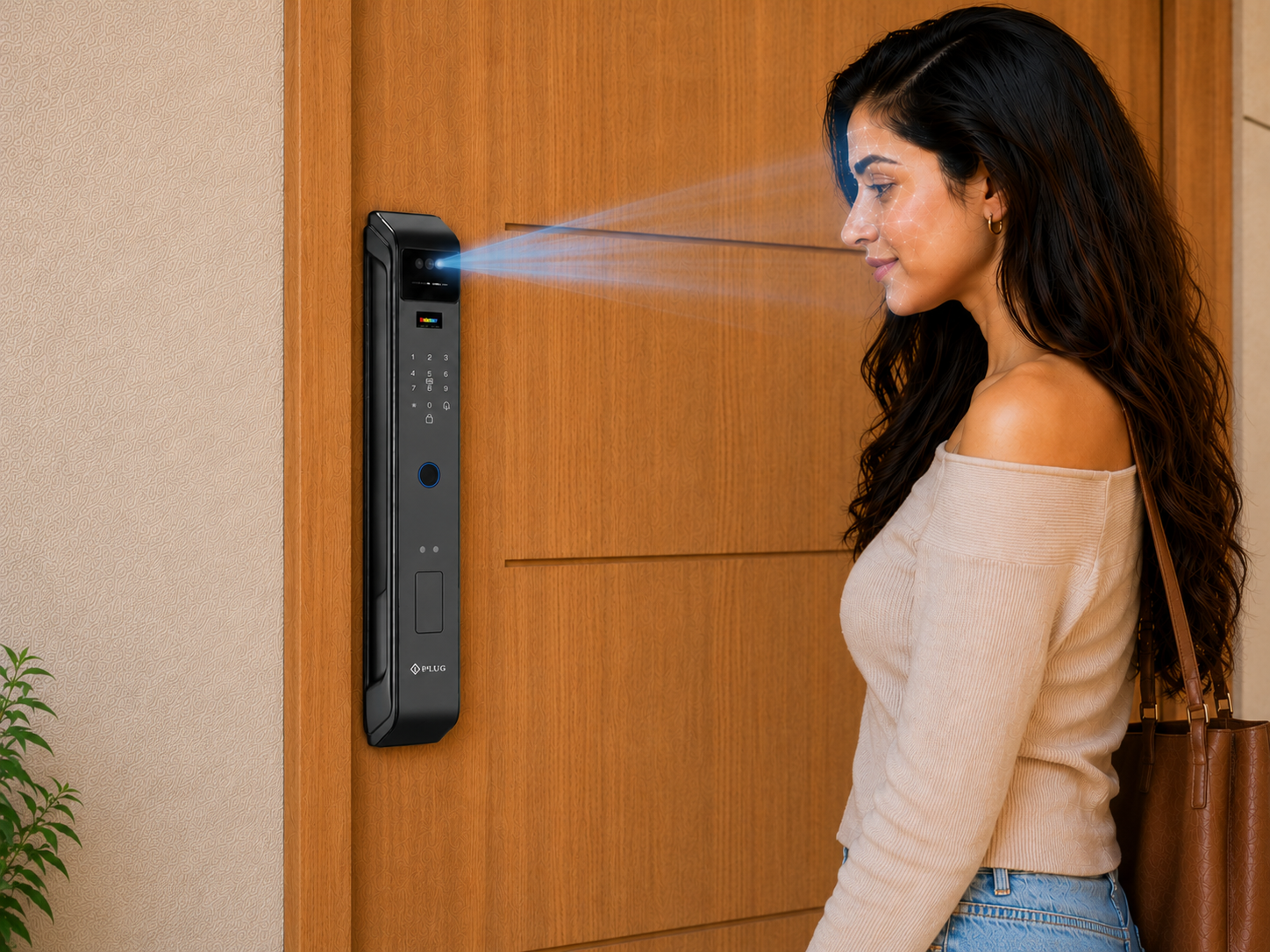
How Face Recognition Technology Is Changing Access Control
Face Recognition Technology has come a long way from traditional keys and access cards. As organizations and homeowners seek more secure and convenient ways to manage entry, Face Recognition Technology has emerged as one of the most innovative developments in modern security. Unlike traditional locking systems, Face Recognition Technology verifies a person’s identity within seconds, offering fast, contactless, and reliable access. As smart homes and businesses continue to adopt advanced security solutions, Face Recognition Technology is becoming an essential feature in modern access control systems.
By using a person’s unique facial features for identification, face recognition systems are helping redefine how access is granted and managed across residential, commercial, and industrial environments.
The Evolution of Access Control
For many years, access control relied on physical credentials such as keys, cards, and PIN codes.
While these methods remain widely used, they have certain limitations:
- Keys can be lost or duplicated
- Access cards can be misplaced
- PIN codes can be forgotten or shared
- Manual verification can be time-consuming
Face recognition technology addresses many of these challenges by providing a seamless and automated authentication process.
What Is Face Recognition Access Control?
Face recognition access control uses biometric technology to verify a person’s identity before granting access.
When a user approaches the system:
- The camera captures a facial image
- The software analyzes facial characteristics
- The information is compared with registered user data
- Access is granted if a match is confirmed
The process typically takes only a few seconds and requires minimal user interaction.
The Rise of Contactless Security
One of the biggest advantages of face recognition is that it is completely contactless.
Users do not need to:
- Touch sensors
- Swipe cards
- Enter passwords
- Carry physical credentials
This creates a smoother and more hygienic access experience, particularly in high-traffic environments.
Improving Security Through Biometrics
Every face contains unique characteristics that help distinguish one individual from another.
Because facial identities cannot be easily borrowed or shared, face recognition systems provide stronger identity verification compared to many traditional access methods.
This makes them particularly valuable for areas that require enhanced security.
Faster Access for Users
Speed is an important factor in access management.
Face recognition systems help reduce delays by allowing authorized users to gain access almost instantly.
This can be especially beneficial in:
- Corporate offices
- Residential communities
- Educational institutions
- Healthcare facilities
- Commercial buildings
- High-volume entry points
The result is a more efficient flow of people throughout a property.
Better Access Management
Modern face recognition systems provide administrators with greater control over access permissions.
Organizations can:
- Add users quickly
- Remove access rights instantly
- Manage multiple locations
- Control restricted areas
- Monitor entry activity
- Generate access reports
This flexibility improves overall security management.
Applications Across Multiple Industries
Face recognition access control is now being used in a wide range of environments.
Common applications include:
- Office buildings
- Apartment complexes
- Gated communities
- Schools and universities
- Hospitals
- Warehouses
- Data centers
- Government facilities
Its versatility has made it one of the fastest-growing access technologies worldwide.
Integration with Smart Security Systems
Face recognition is increasingly being integrated with broader security ecosystems.
These systems may work alongside:
- Smart locks
- Video surveillance systems
- Visitor management platforms
- Attendance management systems
- Building access control networks
This integration creates a more connected and intelligent security infrastructure.
The Future of Access Control
As biometric technology continues to evolve, face recognition is expected to play an even greater role in security and access management.
Future developments may include:
- Improved recognition accuracy
- Faster authentication speeds
- Enhanced privacy protection
- AI-powered security analytics
- Deeper smart building integration
These innovations will further improve both security and user experience.
Conclusion
Face recognition technology is transforming access control by replacing traditional credentials with secure, contactless biometric authentication. Its ability to improve security, streamline entry processes, and simplify access management has made it a valuable solution for homes, businesses, and institutions.
As organizations continue to adopt smarter security strategies, face recognition is set to become an increasingly important part of the future of access control.
